Finding your color season. . . part 2
In my previous blog I introduced you to what the color season theory is and how understanding that the colors you wear can impact the vibrancy of your appearance. Now, I want to delve into how you decide what colors are going to be magic for you!
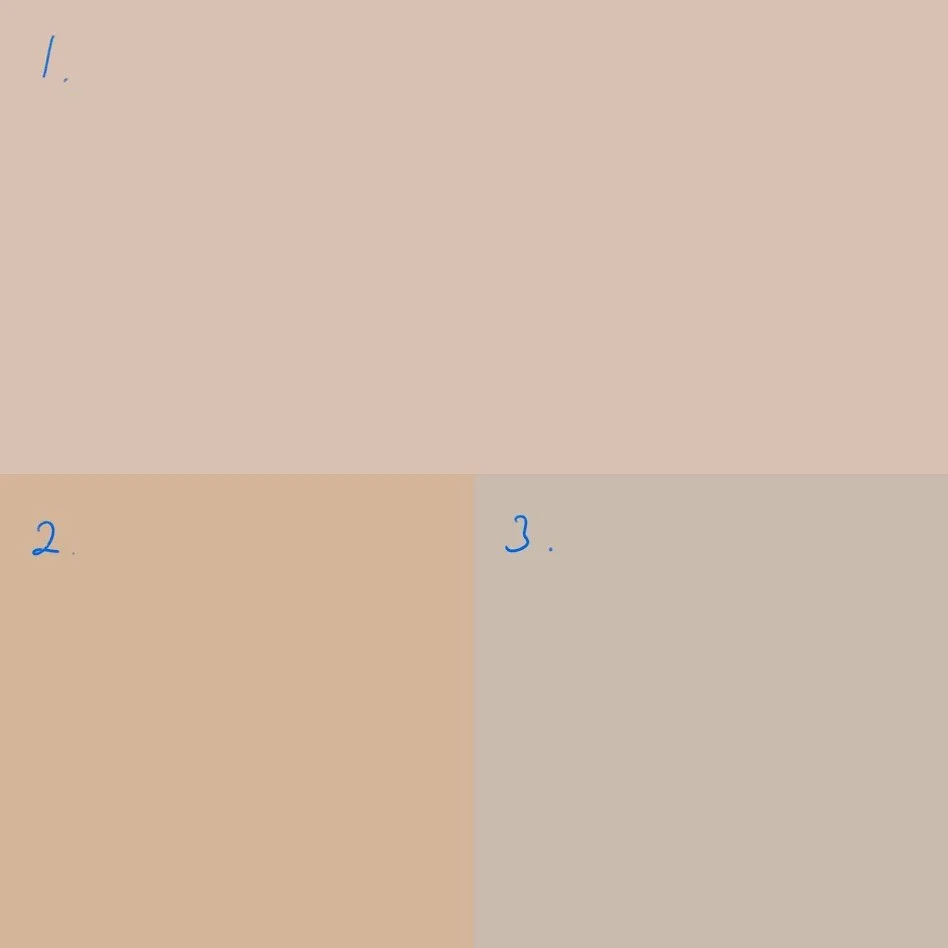
(1.) This base color goes across this entire square, (2.) I put a warm color under the base color in this section, (3.) I put a cool color under the base color
It can be tricky deciding if you have cool undertones or warm ones. In the above image I have taken a “peachy flesh color” (1.) and put orange (2.) and blue (3.) underneath it for purposes of trying to understand how warmness or coolness affect the top layer. Thinking back to my “Frozen” example in the previous blog see how the warm/orange one looks more like Anna and the cool/blue one looks more like Elsa? I can already hear you saying, “Yes, Jess this is all great, but I can’t picture these things on real people.”
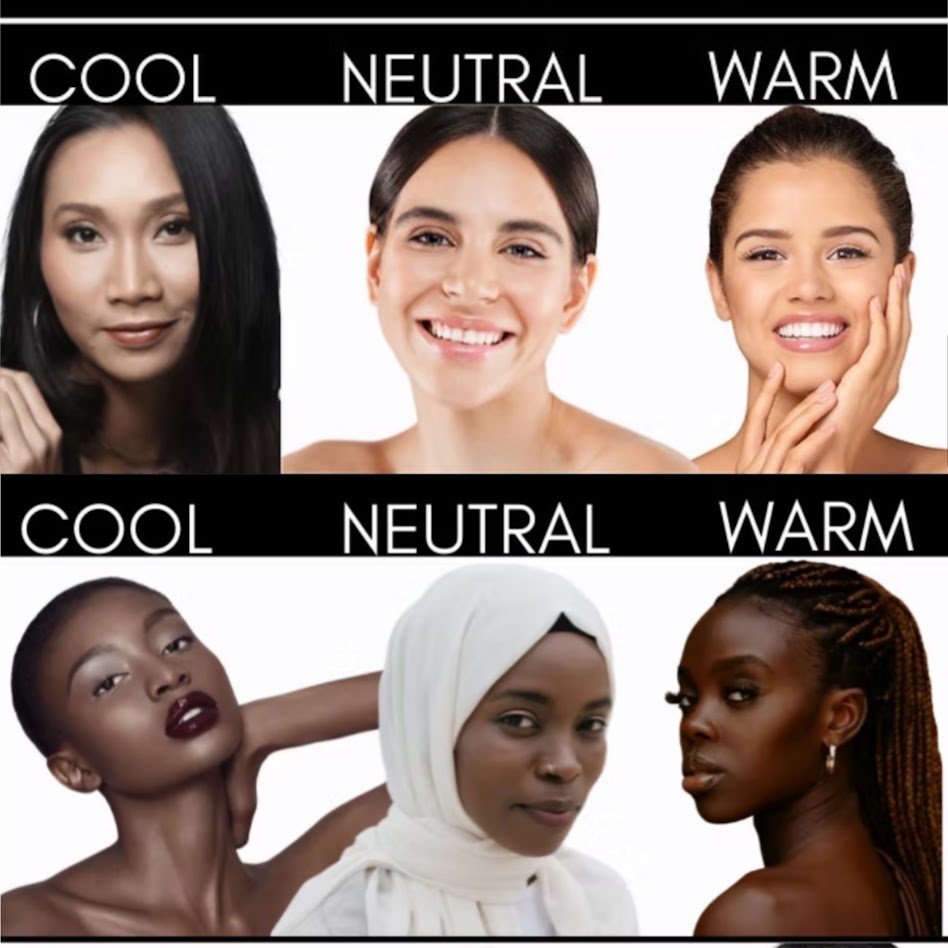
Do you see how the woman with cooler undertones have a kind of grayness to them and the warm undertones look more orange?
Still having trouble spotting coolness or warmness on yourself? There are some little tests you can do:
Gold vs Silver- I’ve noticed that people seem to naturally choose the metal that suits them best. If you are drawn to silver than it’s a good bet you have cool undertones. Gold? yup you guessed it, warm undertones. Do you wear a mixture of both metals and neither one seems to be a standout? You probably have a neutral undertone.
Your natural hair color can be another fantastic clue:
Cool hair colors contain zero red or warm golden blonde.
Examples of cool colorsare going to be black, dark rich brown, mushroom brown, platinum blonde, silver/white, or pearl gray.
Warm hair colors are just the opposite. You will have reds and golds.
Examples of warm hair colors include strawberry blonde, bright red, chestnut brown, dark brown with some auburn strands, and golden blonde.
Your eye color is another thing to consider:
Cool eye color examples are deep dark brown, gray blue, dark blue, and sage green.
Warm eye color examples are eyes with flecks of gold, hazel, olive green, blue green, or bright green.
You just look through pictures of yourself. There is bound to be at least one or two that you feel like are flattering. I was struggling to decide my colors and I did this. I noticed that each and every picture that I thought was half decent I was wearing cool colors. It was uncanny.
Tune into comments from others. If you are getting compliments about your appearance take note of what color you have on. If someone says something snarky like “you look tired today” also take note. You might notice a tend.
Trust your instinct. I don’t think we do this enough in our lives. If you’ve done all the “tests” above and they don’t line up with what you feel is true, then go with your gut. I am a neutral-cool leaning undertone and I don’t have an appearance that is obviously cool or warm. It was confusing for me. But I kept reaching for cool colors. I felt better in cool colors even though I thought I should be wearing warm colors and I liked warm colors on other women. Often, we innately know what colors make us shine so paying attention to what colors you reach for can be another clue.
This is your homework for now. Think like a scientist, gather the clues, and answer the question . . . cool or warm?
In the next blog (plan to see it in your inbox next weekend if you subscribed to my newsletter) I will break down what the different “color seasons” are and teach you about one more step I found helpful using your own clothes. This step helped validate my hypothesis of if looked better in cool colors or warm. All of this investigation and thinking about color, will help you in the long run, when you are making choices about what to wear. Once you can spot your color season out in the wild you will easily navigate to the colors that are going to make you shine.
